Benefits of Regular Fleet Vehicle Inspections UAE
Running a commercial fleet in the UAE is no small undertaking. Between the intense summer heat, long inter-emirate routes, heavy payload requirements, and the constant pressure to keep deliveries on schedule, every vehicle in your fleet is under significant daily stress. In this environment, the difference between a well-maintained fleet and a neglected one shows up quickly in breakdowns, repair bills, regulatory issues, and ultimately, your business’s reputation.
Regular fleet vehicle inspections are one of the most effective tools available to transport operators, logistics companies, and fleet managers. They are not just a compliance checkbox. Done consistently, they are a business-critical practice that protects your drivers, your vehicles, and your bottom line.
What Are Fleet Vehicle Inspections?
A fleet vehicle inspection is a systematic, structured assessment of a commercial vehicle’s mechanical and safety condition. It covers everything from brakes, tyres, and steering to engine systems, fluid levels, electrical components, and safety equipment.
Unlike reactive repairs — where you fix what’s already broken — inspections are preventive by design. They catch developing problems before they cause failures. For commercial operations running trucks, vans, or heavy equipment across UAE roads daily, this proactive approach is not just good practice; it’s essential.
Inspections can be structured as daily pre-trip checks carried out by drivers, periodic in-house maintenance reviews, or comprehensive professional assessments performed by qualified diesel and commercial vehicle technicians.
Key Benefits of Regular Fleet Vehicle Inspections UAE
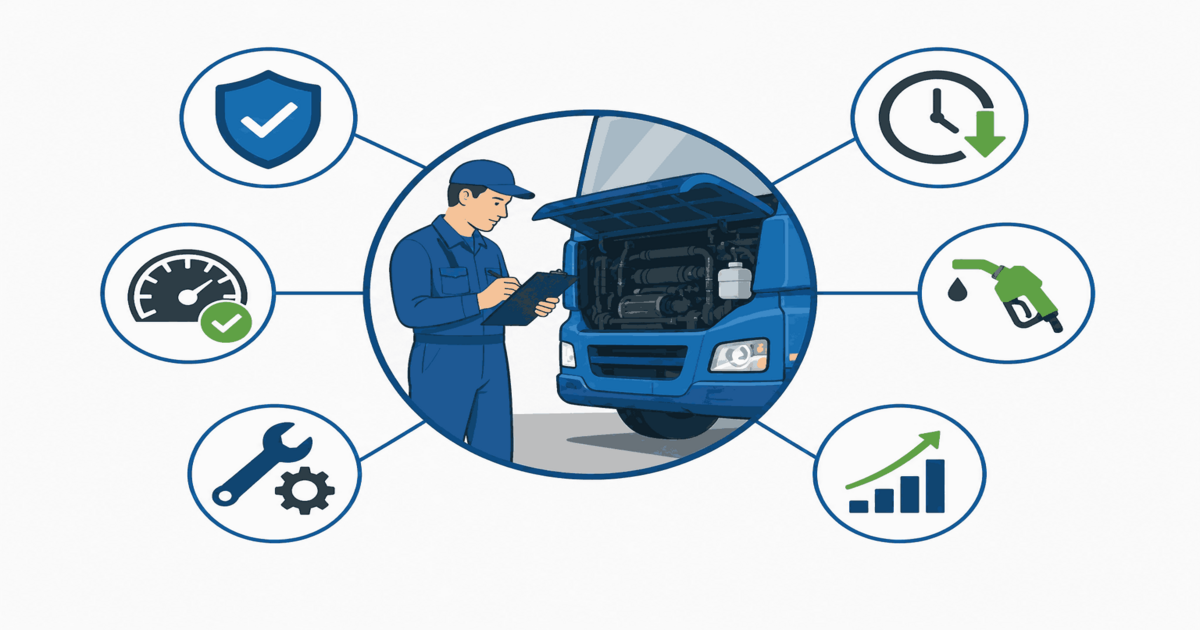
Improved Driver and Road Safety
This is the most important benefit, and everything else flows from it. A vehicle with worn brakes, underinflated tyres, or failing suspension is a hazard — to the driver, to other road users, and to the cargo it carries.
Regular truck safety inspections identify these risks before they cause accidents. In the UAE, where commercial vehicles share highways with high-speed passenger traffic, this responsibility is especially serious.
Reduced Vehicle Downtime
Unplanned breakdowns are one of the most disruptive and costly events in fleet operations. A single vehicle off the road can delay deliveries, put pressure on the rest of the fleet, and damage client relationships.
Routine inspections allow maintenance teams to spot early-stage wear and address it during scheduled downtime — on your terms, not the road’s. This keeps vehicles in rotation and operations running smoothly.
Lower Long-Term Repair Costs
Minor mechanical issues that go undetected have a habit of developing into major failures. A small oil leak becomes an engine rebuild. Uneven tyre wear accelerates suspension damage. What could have been a straightforward fix turns into a costly repair job.
Consistent fleet maintenance Dubai operators rely on regular inspections precisely because they reduce total cost of ownership. The money spent on routine checks is almost always less than the money saved by avoiding compounded repairs.
Better Fuel Efficiency
Vehicles that are not maintained properly consume more fuel. Underinflated tyres increase rolling resistance. Dirty air filters restrict combustion airflow. Sluggish engine performance from overdue servicing raises fuel burn across every journey.
For a fleet running dozens of vehicles over thousands of kilometres each month, even a modest improvement in fuel efficiency per vehicle adds up to meaningful cost savings.
Improved Fleet Reliability
Clients and partners choose logistics and transport providers based on reliability. If your vehicles regularly arrive late, break down mid-route, or require last-minute substitutions, that reputation takes a hit.
A fleet that is inspected and maintained consistently is a fleet that performs consistently. That reliability becomes a competitive advantage in a market where delivery expectations continue to rise.
Regulatory and Compliance Support
Commercial vehicles operating in the UAE are subject to roadworthiness standards and periodic inspection requirements by the relevant transport and licensing authorities. Keeping vehicles in compliant condition — and maintaining proper service records — reduces the risk of fines, forced off-road orders, or complications during renewals.
A regular inspection programme makes compliance a natural outcome of your operational routine rather than a last-minute scramble.
Extended Vehicle Lifespan
Commercial vehicles represent significant capital investment. Every additional year of reliable service from a well-maintained truck improves your return on that investment.
Inspections and timely preventive servicing slow the natural wear and tear process. Engines that receive clean oil on schedule, braking systems that are adjusted before they wear to metal, and cooling systems that are checked before overheating — all of these extend the functional life of the vehicle.
Improved Business Productivity and Reputation
When your fleet runs well, your business runs well. Fewer breakdowns mean fewer disruptions to driver schedules, delivery timelines, and client commitments. Operations become more predictable, and management attention shifts from crisis response to strategic planning.
Over time, a well-maintained fleet becomes part of your brand — a signal to clients, partners, and regulators that your business operates professionally and responsibly.
Important Areas Checked During Fleet Inspections
A thorough commercial vehicle inspection covers a wide range of systems. Key areas include:
- Brakes: pad thickness, disc condition, brake fluid levels, and hydraulic performance.
- Tyres: tread depth, inflation pressure, sidewall condition, and wheel alignment.
- Suspension and steering: component wear, play in steering linkages, and shock absorber condition.
- Engine systems: oil levels and condition, coolant integrity, belt and hose condition, and overall engine performance.
- Fluids and lubrication: engine oil, transmission fluid, power steering fluid, and differential oils.
- Electrical systems: battery health, lighting, indicators, and dashboard warning systems.
- Diesel engine diagnostics: scanning for fault codes, monitoring boost pressure, and identifying fuel system issues.
- Safety systems: seatbelts, mirrors, horn, fire extinguishers, and emergency equipment.
Why Preventive Inspections Matter for Commercial Fleets in UAE
The UAE’s operating environment is genuinely demanding for commercial vehicles. Summer temperatures regularly exceed 45°C, putting cooling systems, lubricants, tyres, and rubber components under constant thermal stress. Long inter-emirate routes mean vehicles travel high daily mileage without frequent opportunity for inspection. Many fleets also operate under heavy load conditions that accelerate wear across braking, suspension, and drivetrain systems.
In this context, waiting for something to go wrong before addressing it is not a viable maintenance strategy. The climate alone shortens service intervals compared to cooler operating environments. Dust and sand ingestion affects air filtration. High temperatures degrade lubricants more quickly.
Proactive, scheduled inspections account for these realities. They allow maintenance teams to adapt service intervals and inspection frequency to the actual conditions the fleet is working in — not just the manufacturer’s baseline recommendations written for temperate climates.
Professional Fleet Inspection and Maintenance Services
While driver-level pre-trip checks are valuable, they are not a substitute for professional mechanical assessment. Qualified technicians with experience in commercial diesel vehicles bring diagnostic capability that goes beyond what a visual walk-around can reveal.
Professional inspections typically include computerised diagnostic scanning, detailed brake and suspension testing, tyre pressure and wear analysis, and a full review of fluid systems and engine components. Technicians can identify patterns of wear that indicate deeper issues, provide documented inspection reports that support compliance records, and advise on upcoming maintenance requirements before they become urgent.
Al Salehi, operating across the UAE, provides fleet maintenance, commercial vehicle inspection, and diesel engine servicing for truck operators and transport businesses. Their team is experienced with the specific wear patterns and failure modes common in UAE operating conditions, making them a practical resource for fleet managers looking to build a reliable, proactive maintenance programme. More information about their services is available at alsalehi.ae.
Best Practices for Fleet Maintenance
Building a strong inspection culture across your fleet operations comes down to a few consistent habits:
- Establish a formal inspection schedule — set fixed intervals for daily driver checks, monthly in-house reviews, and quarterly or bi-annual professional assessments.
- Implement a driver reporting system — give drivers a simple, standardised way to log observed issues. Problems identified on the road should reach the maintenance team quickly.
- Maintain detailed service records — document every inspection, repair, and part replacement. This supports compliance, informs future decisions, and preserves vehicle value.
- Prioritise preventive servicing over reactive repairs — budget for scheduled maintenance as a planned operational cost, not an emergency fund.
- Work with qualified diesel and commercial vehicle technicians — not every garage has the equipment or experience to properly service heavy-duty trucks. Choose specialists who understand fleet operations.
- Review fleet performance data regularly — fuel consumption, downtime frequency, and repair cost trends reveal which vehicles need additional attention and whether your inspection programme is delivering results.
Conclusion
Regular fleet vehicle inspections are not an overhead cost — they are a return on investment. Every inspection that catches a developing fault before it becomes a failure saves money, protects a driver, and keeps a vehicle in service. Across a fleet of any size, those savings and protections compound significantly over time.
For transport and logistics operators in the UAE, where climate, road conditions, and operational demands are genuinely challenging, a consistent inspection programme is one of the clearest distinctions between a fleet that thrives and one that struggles.
If your fleet is due for a professional assessment or you’re looking to build a more structured maintenance programme, connecting with experienced commercial vehicle specialists is the right first step. Visit alsalehi.ae to learn more about fleet inspection and diesel vehicle maintenance services available across the UAE.
You May Also Like
Diesel Fuel Injection System Explained for Trucks
Common Diesel Injector Problems in Heavy Trucks